For retro gaming away from a screen, I use three handheld emulation devices. Each one covers a different sweet spot in the trade-off between size, power and convenience. The key difference is what systems each one can actually emulate well, and how much effort it takes to get there.
ODROID-GO
The ODROID-GO by Hardkernel is a DIY handheld built around an ESP32 microcontroller. It has a 2.4-inch 320x240 TFT display, a speaker, D-pad, face buttons, shoulder buttons, a Micro SD card slot, and a built-in rechargeable battery. It runs the stock firmware, which loads games from the SD card. The ESP32 is a dual-core chip running at 240 MHz with 4 MB of PSRAM, which is enough for 8-bit systems but starts to struggle with anything heavier.
What it plays well: NES, Game Boy, Game Boy Color, Sega Master System, Sega Game Gear.
What it does not play well: Anything beyond 8-bit is not on there, and would not run well anyway.
Game packs: Full game packs for all supported systems are on the SD card. No need to pick and choose.
Why use it: The killer feature is instant-on. The ESP32 boots in literally no time, you switch it on and the game is right there. A stopped game can be picked up again straight away. No other device in the collection comes close to this. It is the smallest and cheapest of the three, and for pure 8-bit gaming it is surprisingly capable. It is the grab-and-go option when you just want to play some NES or Game Boy games on the couch.
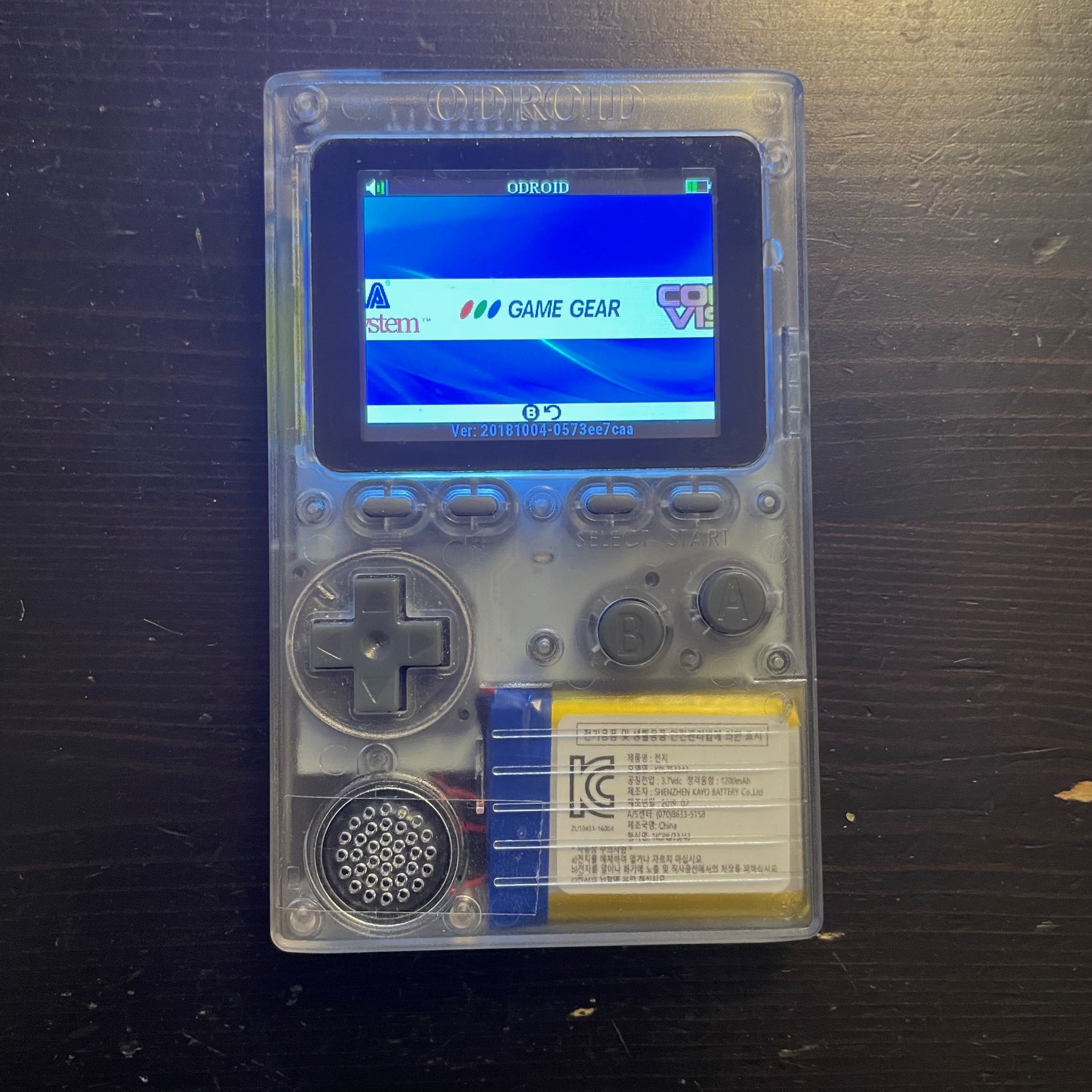
The ODROID-GO showing the Retro-Go system selection screen.
PocketGo
The original PocketGo by BittBoy is a handheld in a Game-Boy-Advance-style landscape form factor with a 2.4-inch IPS display at 320x240. It runs on an Allwinner F1C100S chip at 533 to 798 MHz with 32 MB of RAM. The community CFW 1.3 firmware (Miyoo CFW) replaces the stock software with GMenu2X as the frontend, adds support for more emulators, a screen tearing fix, theme customisation and better overall performance. The stock firmware works but is rough around the edges, with an inconsistent button mapping across emulators and a less polished menu. It has D-pad, four face buttons, shoulder buttons, and runs off a 1000 mAh battery.
What it plays well: Game Boy, Game Boy Color, Game Boy Advance, NES, Sega Genesis, Sega Master System. The GBA emulation is the real draw here, something the ODROID-GO cannot do.
What it does not play well: SNES is playable but not perfect, with occasional slowdowns. PlayStation is not an option.
Game packs: Full game packs for all supported systems are on the SD card.
Why use it: It is still pocketable, the IPS screen looks great, and it fills the gap between the ODROID-GO and the RG35XX. If you want Game Boy Advance on the go without carrying something bigger, this is the one. The CFW 1.3 firmware makes a real difference over the stock software.
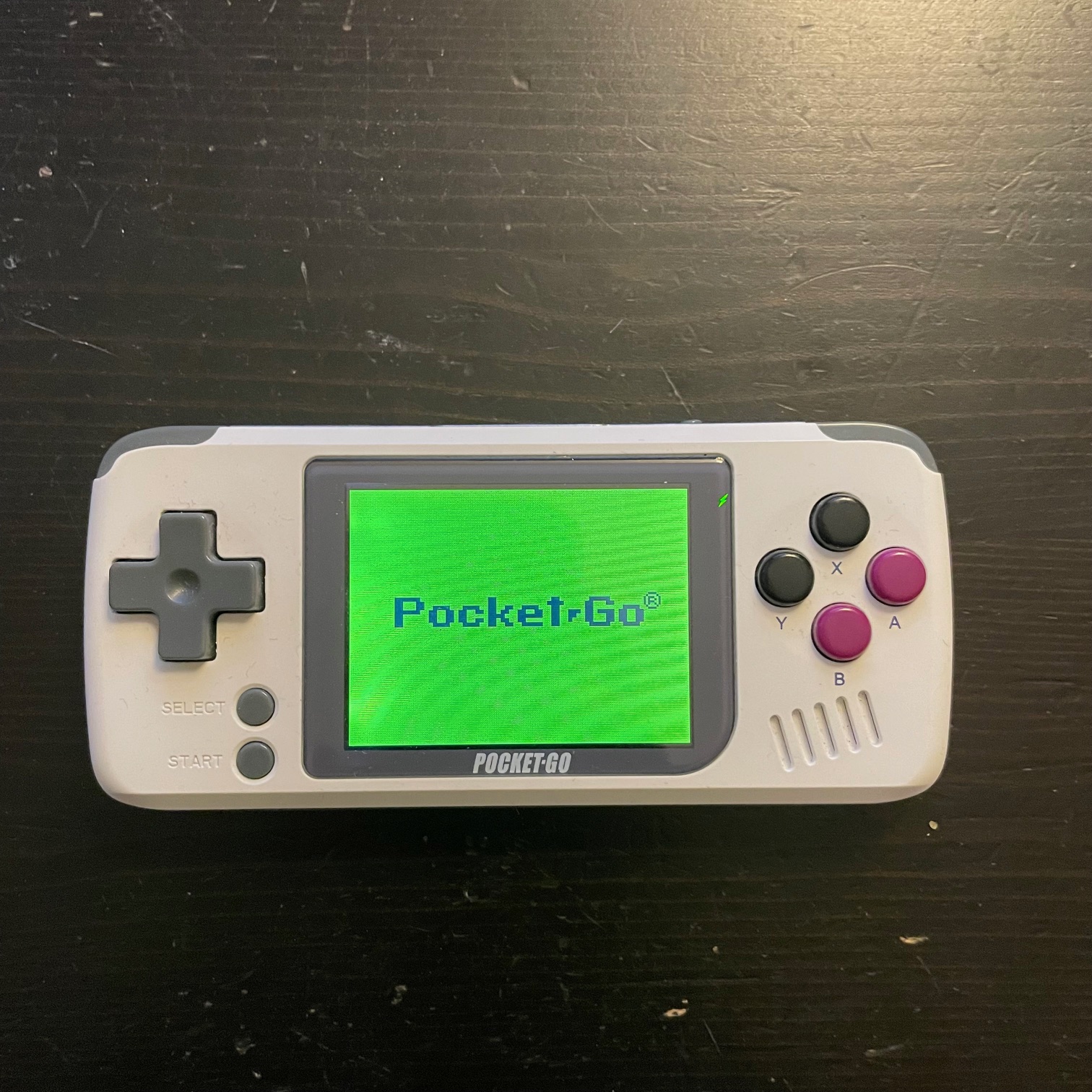
The PocketGo booting into Miyoo CFW 1.3.
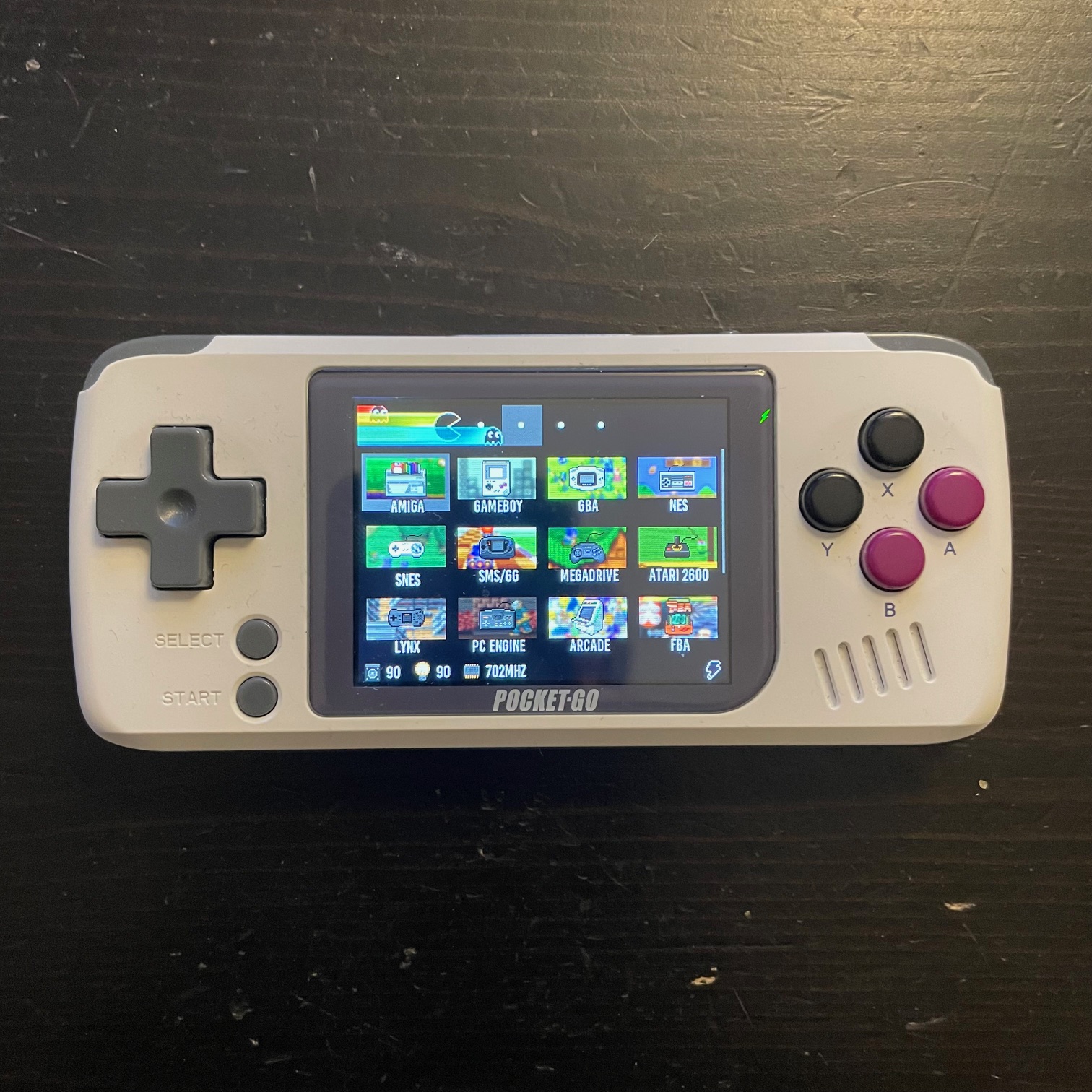
The system selection screen on the PocketGo.
RG35XX
The RG35XX by Anbernic is the serious handheld of the three. It has a 3.5-inch IPS display at 640x480, an Allwinner H313 quad-core ARM Cortex-A53 chip, and significantly more power than the other two. It runs GarlicOS, a custom firmware by Black Seraph built on RetroArch. GarlicOS replaces the stock firmware with a much cleaner interface, adds a sleep mode that lets you resume exactly where you left off, RTC support, overclocking options, and a wider range of configurable emulators. The stock firmware works but is bare-bones and lacks these quality-of-life features. The build quality is noticeably better than the other two devices, with a sturdier feel and a screen that is both larger and sharper.
What it plays well: Everything the ODROID-GO and PocketGo do, plus PlayStation 1, CPS1/CPS2 arcade, Neo Geo, and more demanding SNES titles. It also supports HDMI output to a TV.
What it does not play well: Nintendo 64 and PSP are hit-or-miss. Dreamcast is mostly too much for it.
Game packs: Only the major platforms have game packs installed. The smaller systems are not pre-loaded.
Why use it: When you want the full experience, including PlayStation and arcade games, or when you want to hook the handheld up to a TV. It is the heaviest and least pocketable of the three, but it covers the widest range of systems.
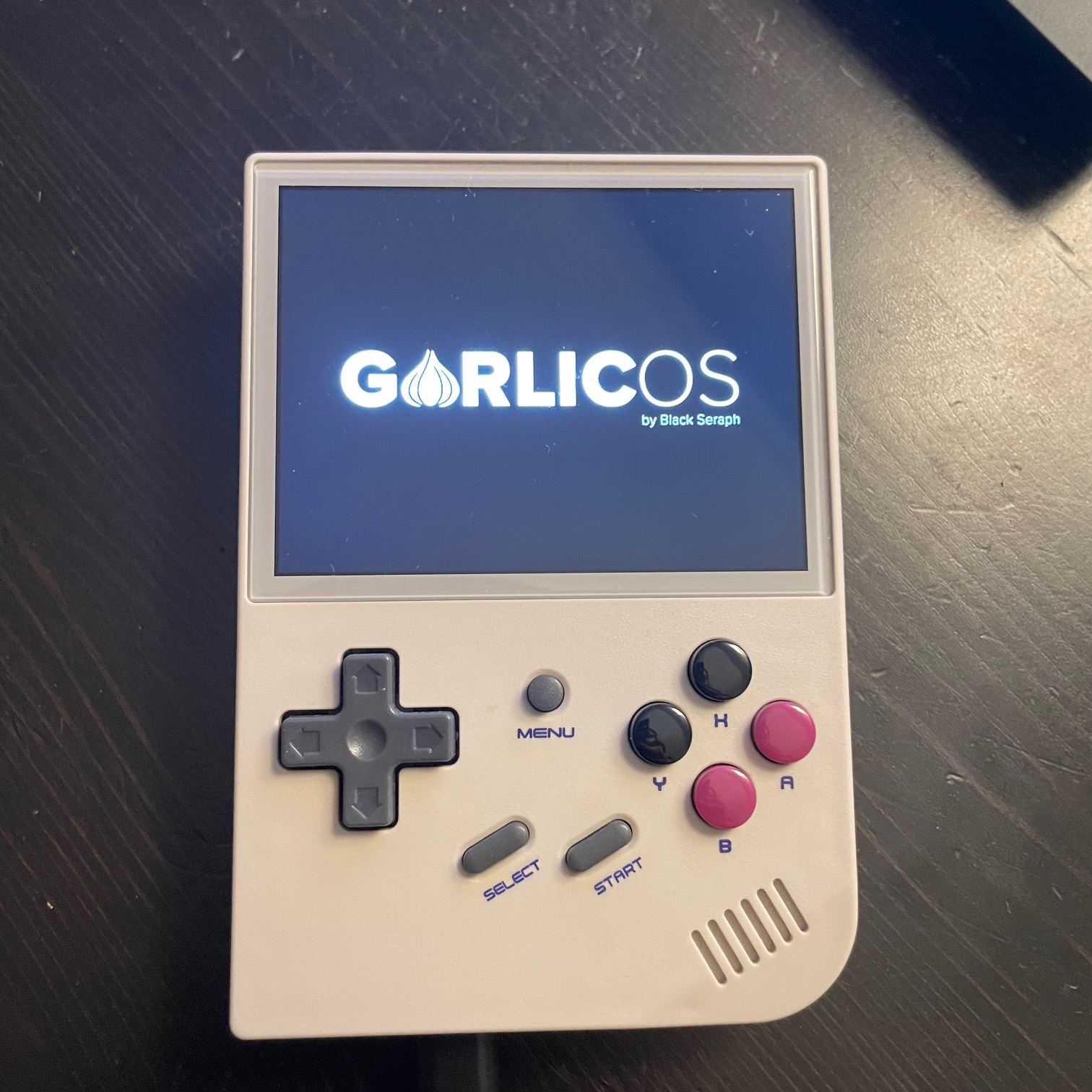
The RG35XX boot screen.
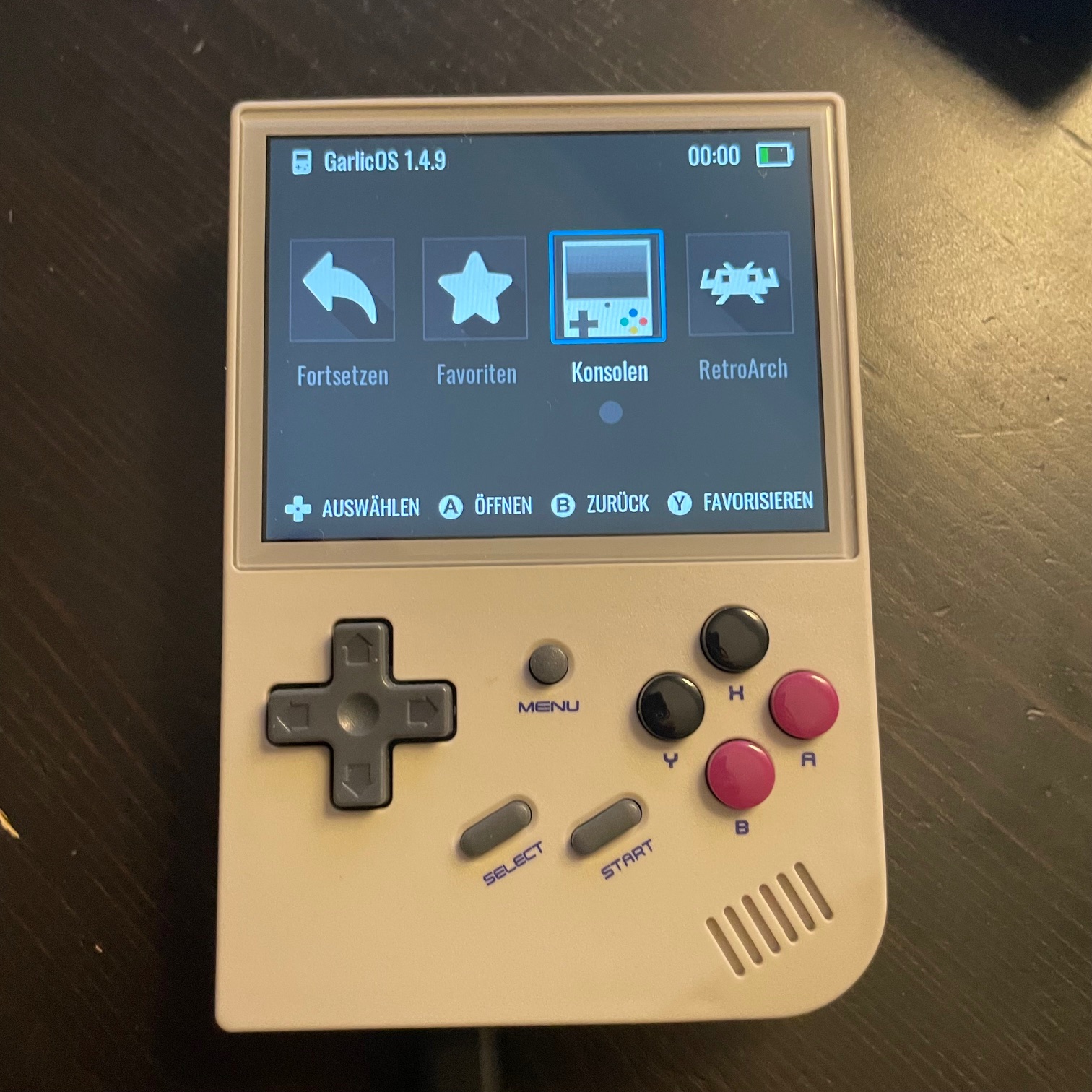
GarlicOS version 1.4.9 running on the RG35XX.
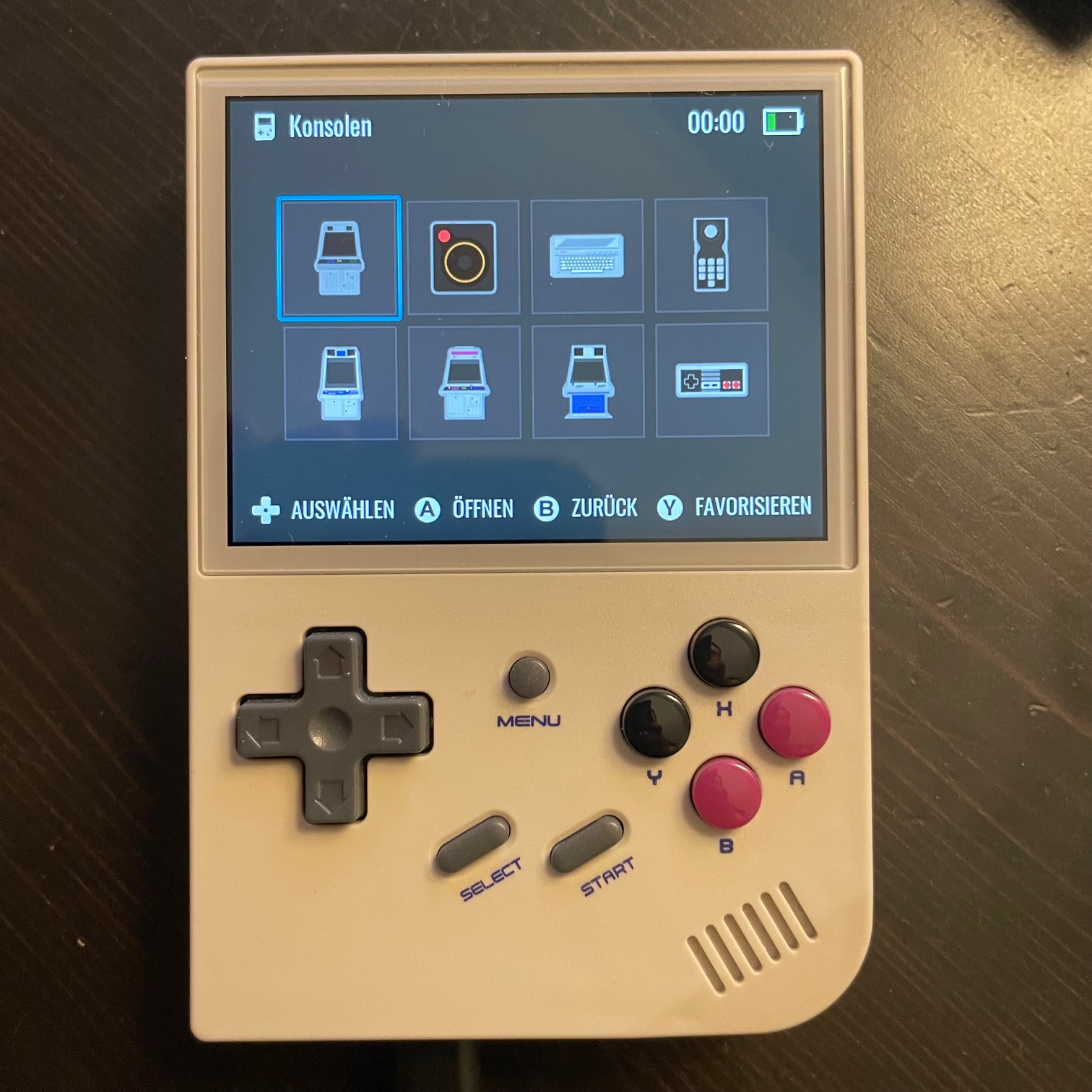
The system selection screen on the RG35XX.
Which One for What
| Device | Best for | Games loaded | Screen |
|---|---|---|---|
| ODROID-GO | NES, Game Boy, instant-on 8-bit | All systems | 2.4" TFT |
| PocketGo | Game Boy Advance, 16-bit on the go | All systems | 2.4" IPS |
| RG35XX | PlayStation, arcade, everything at home | Major platforms only | 3.5" IPS |
The market for tiny retro gaming handhelds is full of traps. If a device's game list reads like a string of titles you have never heard of, that is the tell. Real arcade classics have instantly recognisable names, bootlegs hide behind vague, generic-sounding ones. All three devices above run proper emulation firmware with real ROMs, not bootleg NES clones dressed up as something else.